Period poverty
Period poverty is perhaps one of the more noticeable ways medical misogyny manifests, because of how apparent, immediate, and tangible the consequences are.
Period poverty refers to the lack of access to menstrual products, safe sanitation facilities, education, and supportive environments needed to manage menstruation with dignity. Many people face financial, social, or cultural barriers that make it difficult to access basic essentials such as pads, tampons, or appropriate healthcare. For students, young people, and those experiencing financial hardship, this can mean missing school, avoiding social activities, or feeling shame around something that should never be a source of disadvantage.
Research shows that period poverty is linked to reduced educational participation, increased stress and anxiety, and long-term health risks. In communities where menstruation remains stigmatised or poorly understood, people may also struggle to seek help or talk openly about their needs.
Menstruation is a natural and normal process.
No one deserves to go without reliable access to essential period products.
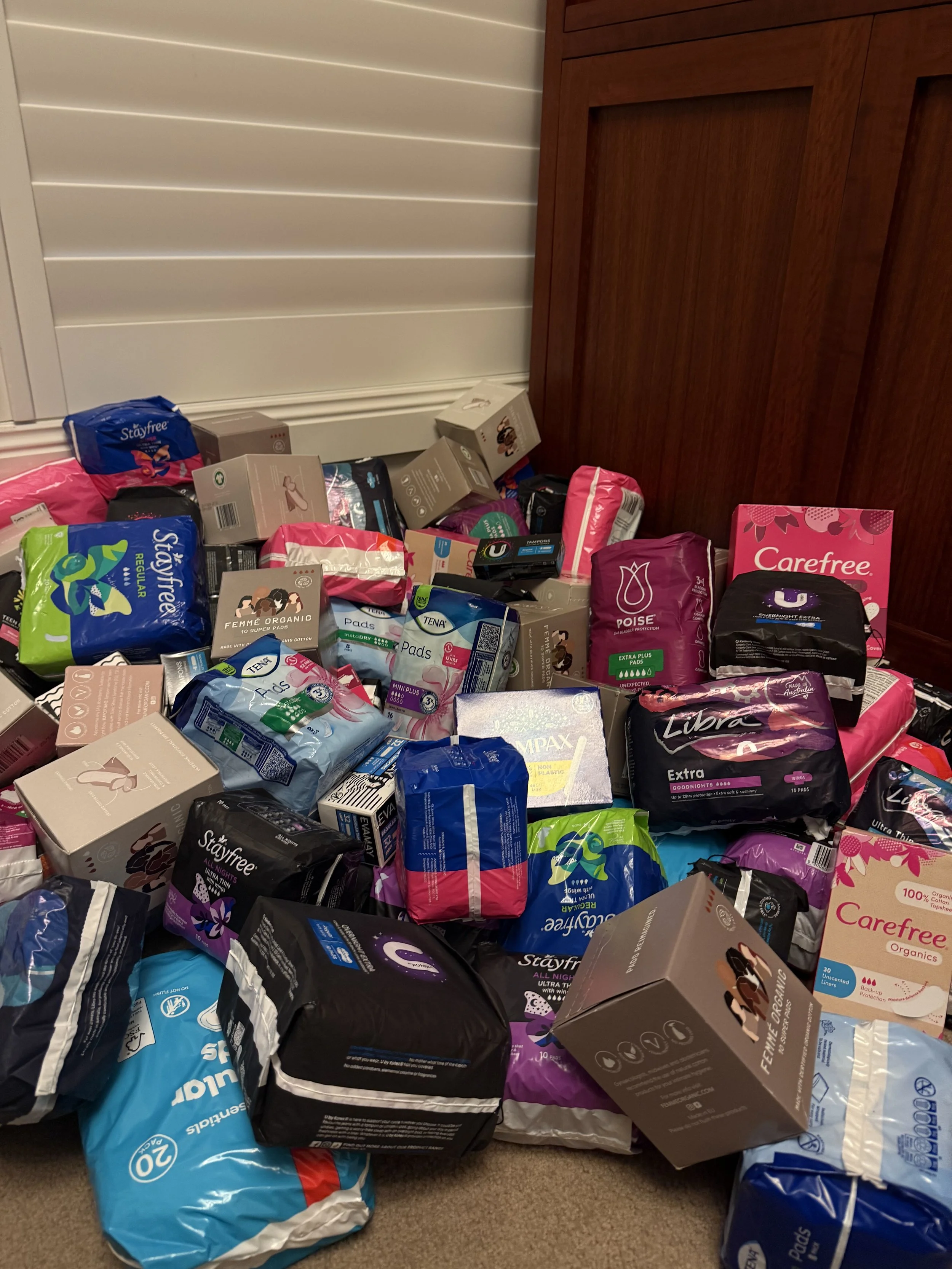
Period pad drive
1000+ products donated.
600+ pads, 400+ tampons.
Thank you schools involved:
Melbourne Girls Grammar School
St Catherine’s School
Loreto Kirribilli
New England Girls’ School
Waitaki Girls’ High School
Charities:
SharetheDignity
Gayle’s Community Share Space
Restore Community
North Richmond Community Health
Second Life Women’s Hub
What we did
In May-June 2026, Health Unheard ran a period pad drive with girls’ high schools across Australia and New Zealand.
We wanted to do something simple and practical to help tackle period poverty, while also starting more conversations about an issue that is still too often overlooked. Students from participating schools donated period products, helping us support people who may not always have easy access to them. It is a common refrain, but for all donators, we often forget how lucky we are. For many os us, period products are just another thing we add to the shopping basket. But for others, having reliable access to pads and other menstrual products is not always a given.
A packet of pads is $5. That’s how much a cup of coffee costs.
Reflection:
One of my favourite parts of the drive was seeing how willing people were to contribute once the issue was actually brought to their attention. Many times, we checked the box, and saw a group of 20 pads together, all donated by the same person. Period poverty can feel like a distant or invisible problem, but it affects real people in our own communities. Before the drive, I think I assumed that getting people to care would be the hardest part. Instead, I realised that often people already do care - they just need to know that there is a problem, and that there is something tangible and easy they can do about it. Period poverty can seem like such a large and distant issue, but putting a donation box in a school hallway made it suddenly immediate. Sometimes making a difference can be as straightforward as adding an extra packet of pads to your basket when you’re at the grocery store.
It also changed the way I thought about advocacy. I had always associated making change with big campaigns, speeches or policy. But this drive showed me the value of smaller, practical action. We did not solve period poverty, and I didn’t go into this thinking that we would. But we made one issue more visible, gave people an easy way to respond to it, and collected products that would actually be used by someone who needed them.
-Katherine Ye
Facts
More than half of Australian menstruators have found it difficult to buy period products
~21% of Indigenous Australians could not afford period products in 2024
41% of people affected by period poverty reported keeping pads or tampons longer than recommended, which increasing infection risk